
Behavioural model as the anchor of a global transformation
Infineon wanted to update its behavioural model in order to respond to the increasing challenges of the highly competitive semiconductor market. The aim of the project was to develop a behavioural model that is as simple as possible and can be applied worldwide, in which behavioural patterns critical to success are codified and which promotes performance-oriented and efficient cooperation. The revision of the "High Performance Behaviour Model" was part of a major transformation programme in which organisational restructuring and cultural change are closely interlinked.
Strong innovative power, adaptability and smooth, customer-centred collaboration along the value chain are important success factors for Infineon in view of the fierce competition in the semiconductor market. They are also largely determined by individual behaviour, including quick, courageous decisions, openness to learning and innovation and a proactive customer focus.
Process: From analysis to implementation
Analysis phase
At the beginning of the project, the central use cases of the new behavioural model were defined in order to create clarity about the specific application and the expected benefits. Two important objectives of the model were identified:
- Orientation for employees: Understanding the company's expectations regarding essential behaviours and aligning one's own behaviour accordingly.
- Evaluation benchmark: The model is also used to measure performance and as a feedback tool.
External benchmarking revealed the range of existing best practices and thus paved the way for an Infineon-specific version that is consistently orientated towards the company's strategic goals. These are above all
- Focus on innovation: Infineon aims to be a leading provider of semiconductor solutions by continuously developing innovative technologies that contribute to overcoming global challenges such as energy efficiency and connectivity
- Speed (Faster time-to-market): A key objective is to bring new products and solutions to market efficiently and swiftly. Responding quickly to customer needs and market dynamics ensures competitive advantages.
- Partnership-based co-operation with customers: Infineon has traditionally placed great value on close co-operation with its customers. The aim is to understand their specific requirements as well as possible, to develop customised solutions and in this way to promote long-term partnerships.
- Global responsibility and ownership: Infineon is committed to its global responsibility in terms of sustainability, ethical behaviour and social responsibility. This is also reflected in the corporate culture, which promotes ownership.
Design phase
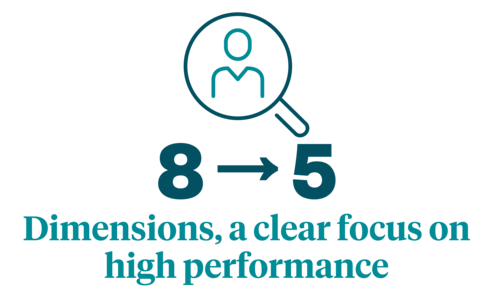
The five overarching behavioural dimensions were developed in an iterative, collaborative process. These had to be clearly distinguishable from one another, easy to communicate and applicable to all employees. High acceptance and comprehensibility for all employees, regardless of their area of work, were also important criteria.
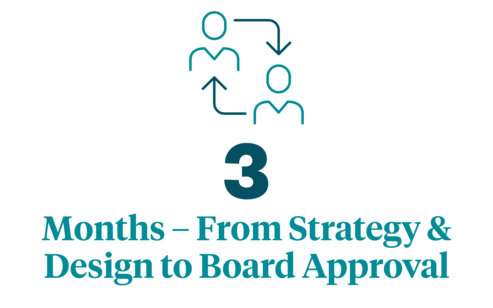
The process began with three design workshops with the CHRO and HR managers, in which strategically relevant dimensions for high performance were identified. An agile, iterative methodology was used in and around the workshops, including semantic analyses and AI-supported word field evaluations. This was supplemented by the early trialling of a radically simplified model with the CEO. This was followed by interviews with eight key stakeholders, such as the CEO, division presidents and operational managers from non-European regions. Finally, the model was finalised in a few quick feedback rounds.
The five dimensions
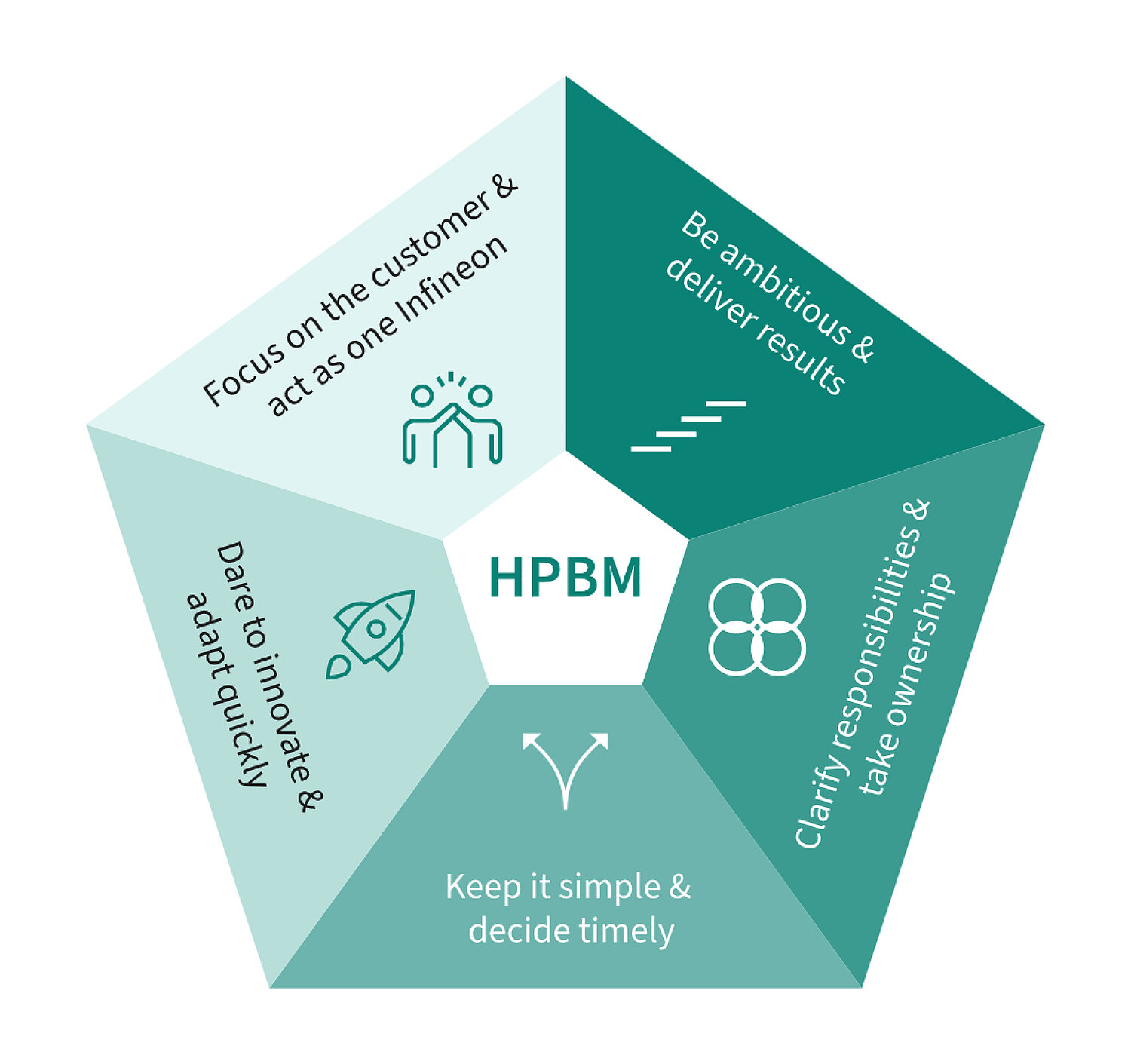
The five behavioural dimensions that emerged from the workshops and interviews reflect Infineon's strategic priorities.
- Be ambitious & deliver results
- Clarify responsibilities & take ownership
- Keep it simple & decide timely
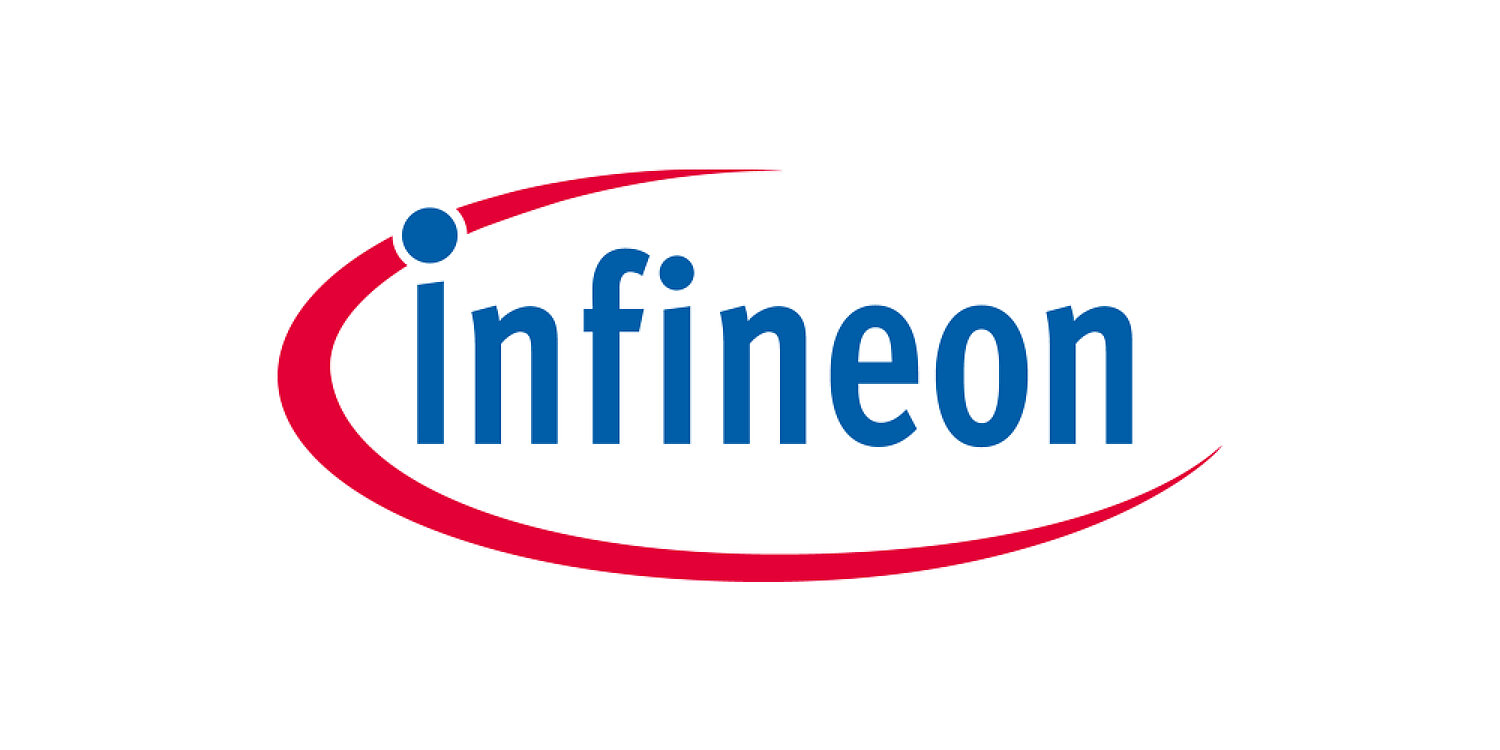
- Adapt quickly & dare to innovate
- Act as one Infineon & focus on the customer
Each dimension was provided with three clearly and simply formulated, measurable behavioural anchors and associated examples that give employees concrete orientation for their day-to-day work. To this end, a consistent visualisation was developed that clearly structures the five dimensions with their behavioural anchors and also emphasises the equivalence and balance of the dimensions through the pentagon design.
Implementation
After final approval by the Infineon Management Board, a detailed roadmap for the implementation was drawn up. This included a comprehensive communication strategy and metrics for monitoring success. These recommendations were incorporated directly into the implementation, which was managed and realised by Infineon.
On the one hand, the performance review is based on a quantitative evaluation of which dimensions are selected by managers to assess their employees and set development goals (and which ratings are achieved by the employees). On the other hand, regular employee surveys are conducted to assess the perceived implementation of the behaviours (both in themselves and in others) as well as the comprehensibility and perceived usefulness of the behavioural model.
Conclusion: A pragmatic and performance-orientated model
Through a very focused, pragmatic and disciplined approach, we have developed a behavioural model in short sprints that is both action-guiding and easy to understand. The five clearly defined behavioural dimensions and the underlying behavioural anchors with examples provide Infineon employees with precise guidance on how they can actively contribute to the long-term success of the company through their behaviour. At the same time, the model provides managers with a sound basis for the performance management and development of their employees.
"With the new behavioural model, we have created a clear orientation and established a strong foundation for our performance management - as a central contribution to SPIRIT, our programme for a performance- and customer-oriented corporate culture."
Markus Fink
CHRO, Infineon Technologies
Facts about the company
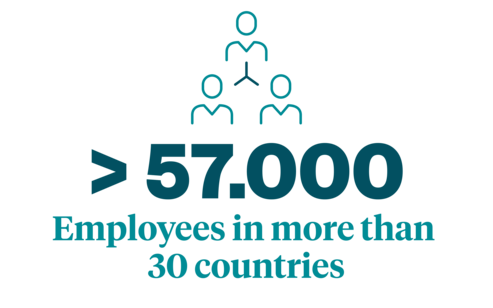
Infineon Technologies is a leading global provider of semiconductor solutions with over 40 years of experience in developing technologies for the digital future. The company offers a wide range of products and solutions in the automotive, industrial, IoT, communications and security sectors. Infineon employs over 55,000 people worldwide and generated sales of 14.7 billion euros in the 2025 financial year. The company's products are available in more than 100 countries and contribute to the further development of applications in the fields of energy efficiency, automation and digitalisation.
Highlight
Example of the dimension: Dare to innovate & adapt quickly
Of the five dimensions of the High Performance Behaviour Model, one exemplifies the cultural aspirations of the entire project: "Dare to innovate & adapt quickly."
In a market characterised by technological change and increasing competitive pressure, it is not enough to manage change - it must be actively driven forward. This dimension translates precisely that into concrete, everyday behaviour: reacting quickly to new conditions, consistently bringing innovations to the customer and seeing the status quo not as a starting point, but as a challenge. Three behavioural anchors - clearly formulated and directly applicable.
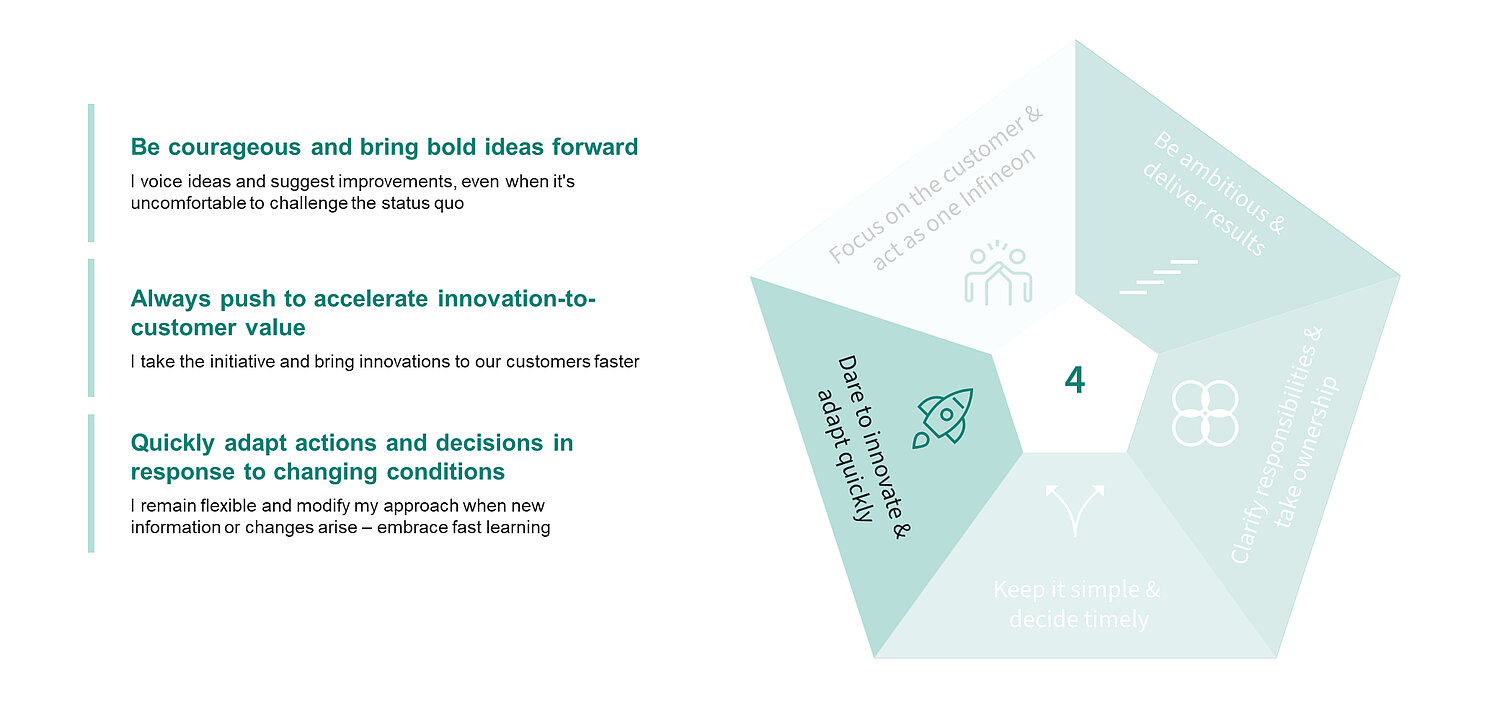
Markus Fink on global transformation at Infineon
As part of the event series H2O2 - Organisation and HRwe spoke with CHRO Markus Fink about the global transformation at Infineon.
Broadening perspectives - further topics
Successful organisations are characterised by a common direction, effective positioning, committed employees, efficient managers, high-performing teams, a constructive culture and experience with change. These characteristics are closely interlinked and reinforce each other.
Corporate Culture
Strengthening teams and organisations with effective leaders. Our approach is based on the conviction that organisational structures only really come to life through the enthusiasm and commitment of employees. It is about transforming formal ideas into tangible reality - and this can only succeed with each individual in the team.
Leadership
Organisational structures only develop their full potential through the commitment and enthusiasm of employees. This is where managers play a decisive role: they are the sparkplugs who, together with their teams, shape a dynamic work culture from rigid guidelines. With a holistic approach, we integrate these aspects into the success factors of excellent organisations and thus create sustainable results.
Strategic Alignment
Clear and common goals are essential for successful organisations. They provide orientation in the market and for internal collaboration. Linking business strategy with vision and purpose is crucial. The larger the organisation, the more important it is to have a clear direction. Our approach anchors common goals in structures and processes, supported by proven methods to ensure a high willingness to change.
Talk to us
Do you have any questions or are you interested in working with undconsorten? Together we can discuss how we can make your organisation more successful with a holistic approach and functional expertise with a focus on sustainability, implementation and efficiency.
Our experts look forward to hearing from you!