
Aperitif in Vienna
HR trends: the gap between aspiration and reality
What studies promise, what business expects – how HR sets priorities
The number of HR studies is growing every year – as is the number of priorities on HR agendas. Leadership development, workforce planning, artificial intelligence: the lists of topics are long and resources are limited.
The undconsorten HR Trend Radar is a meta-analysis of global HR studies – reflecting the priorities of our clients in the DACH region.
Key takeaways from the panel discussion
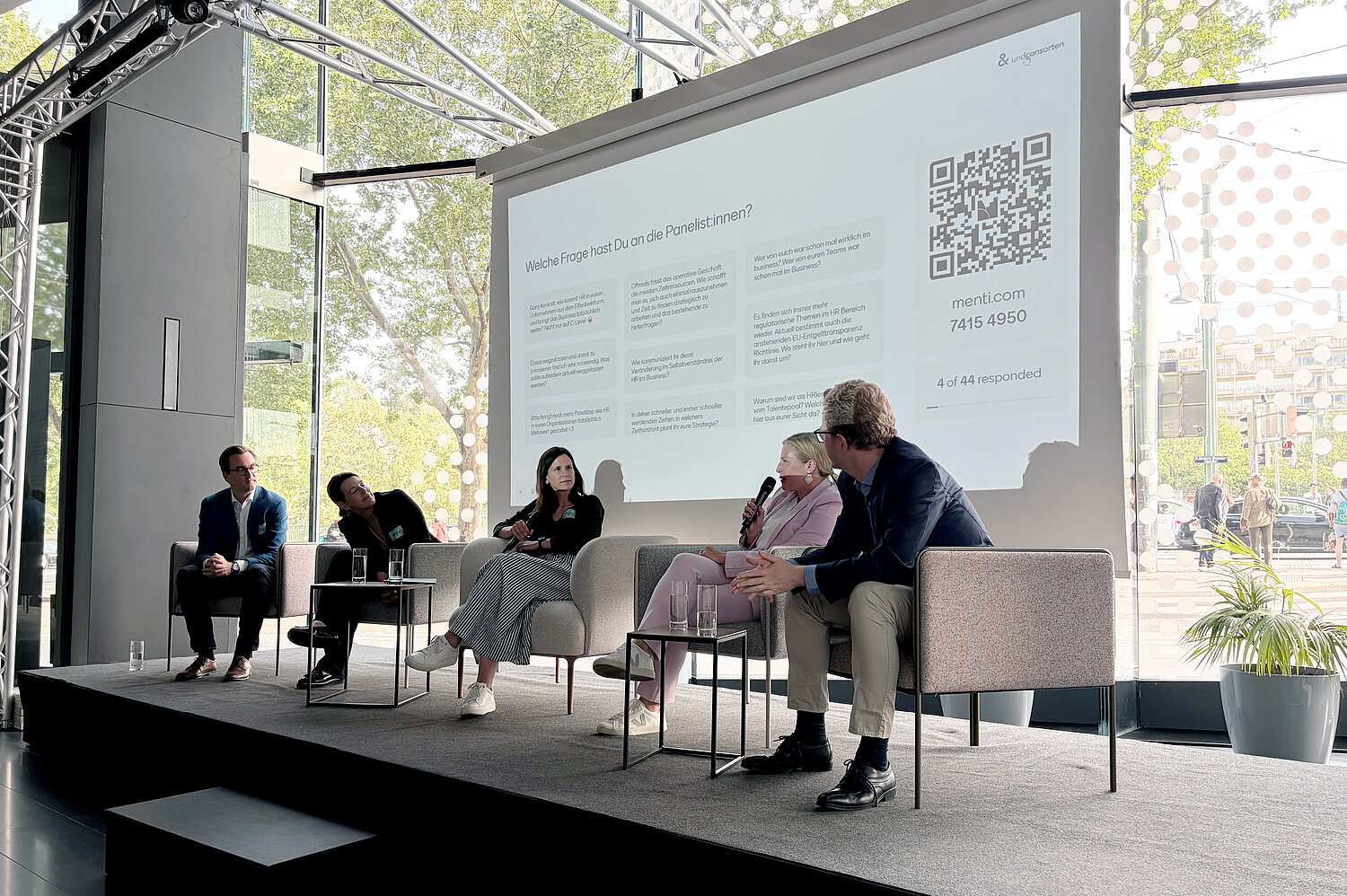
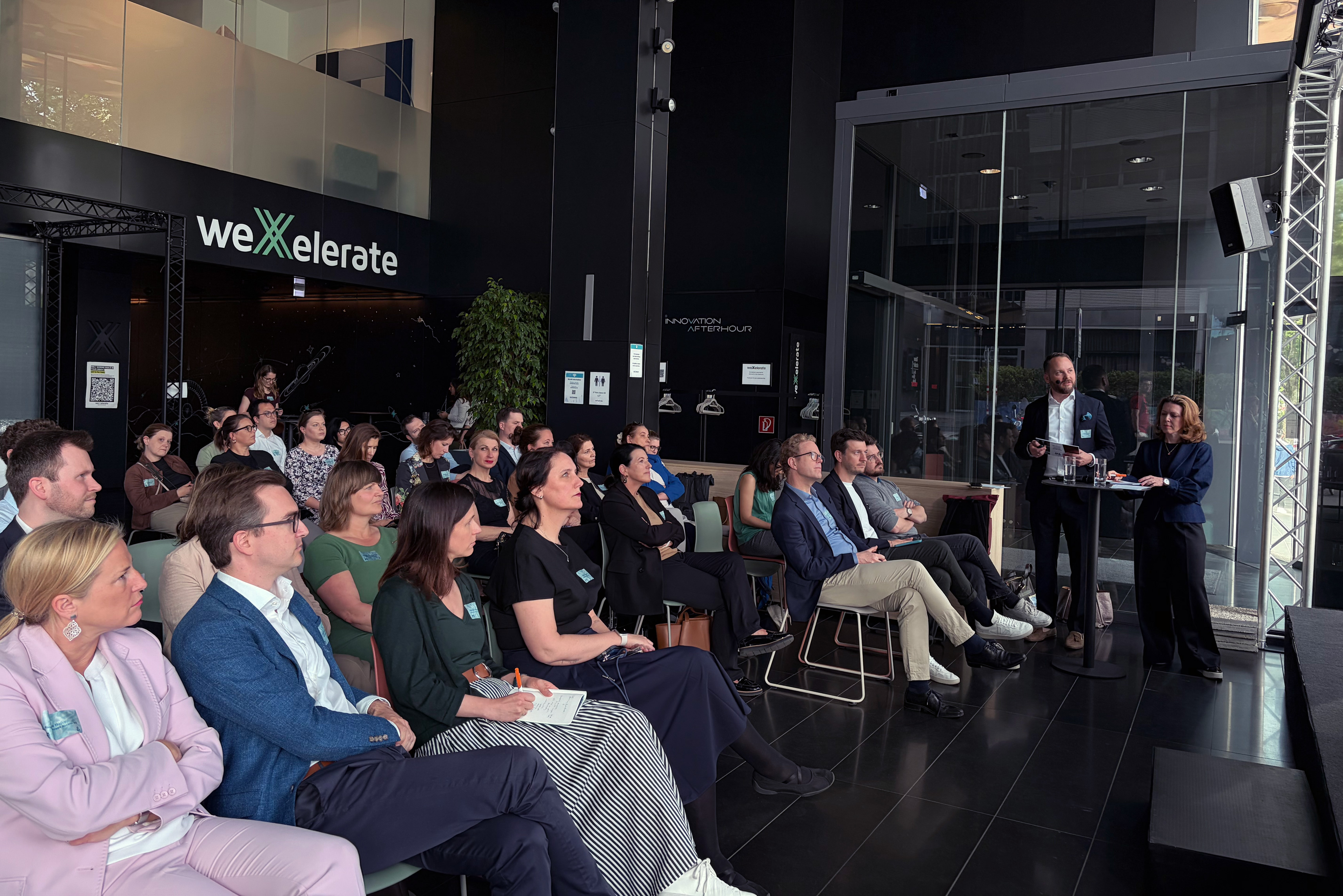
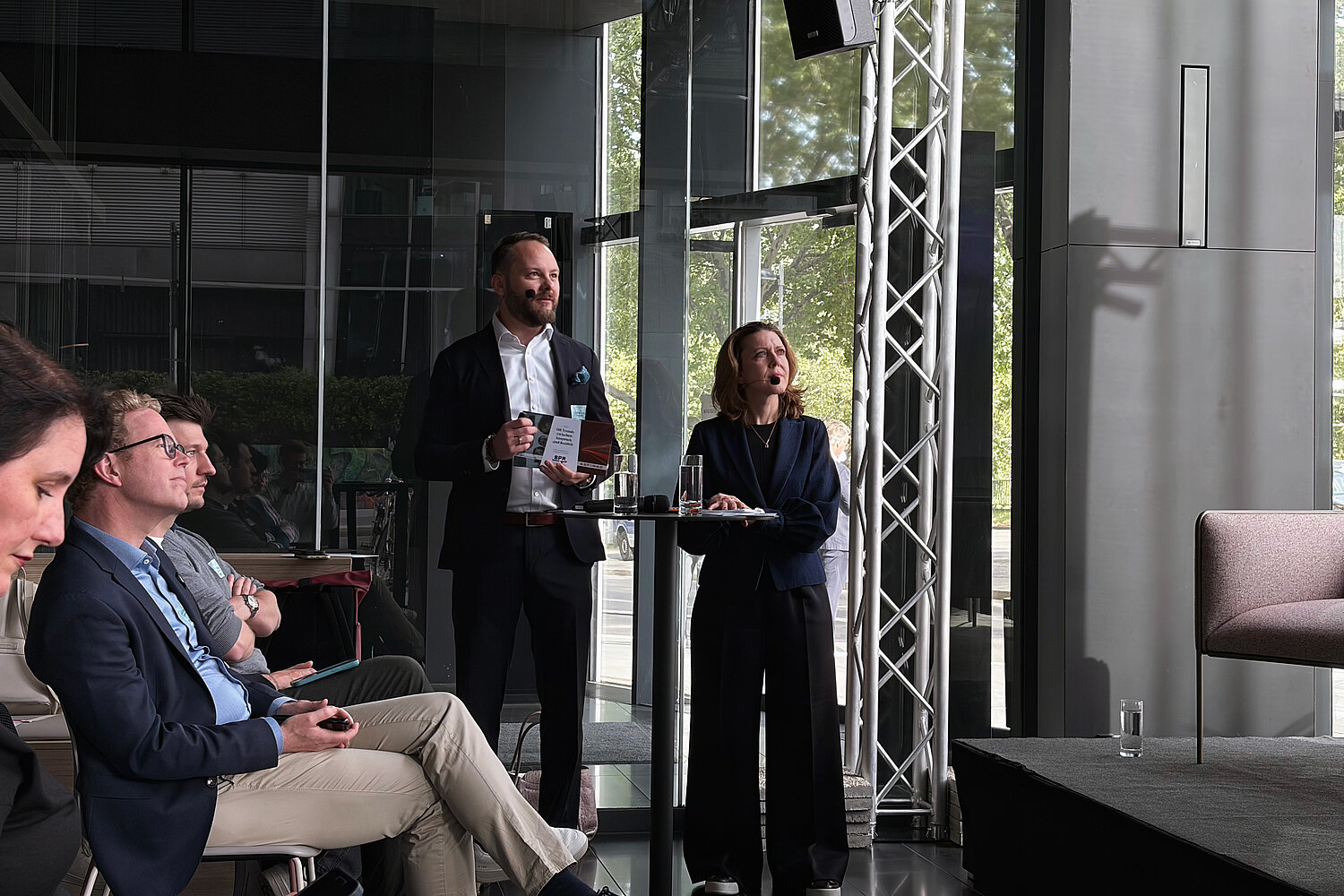
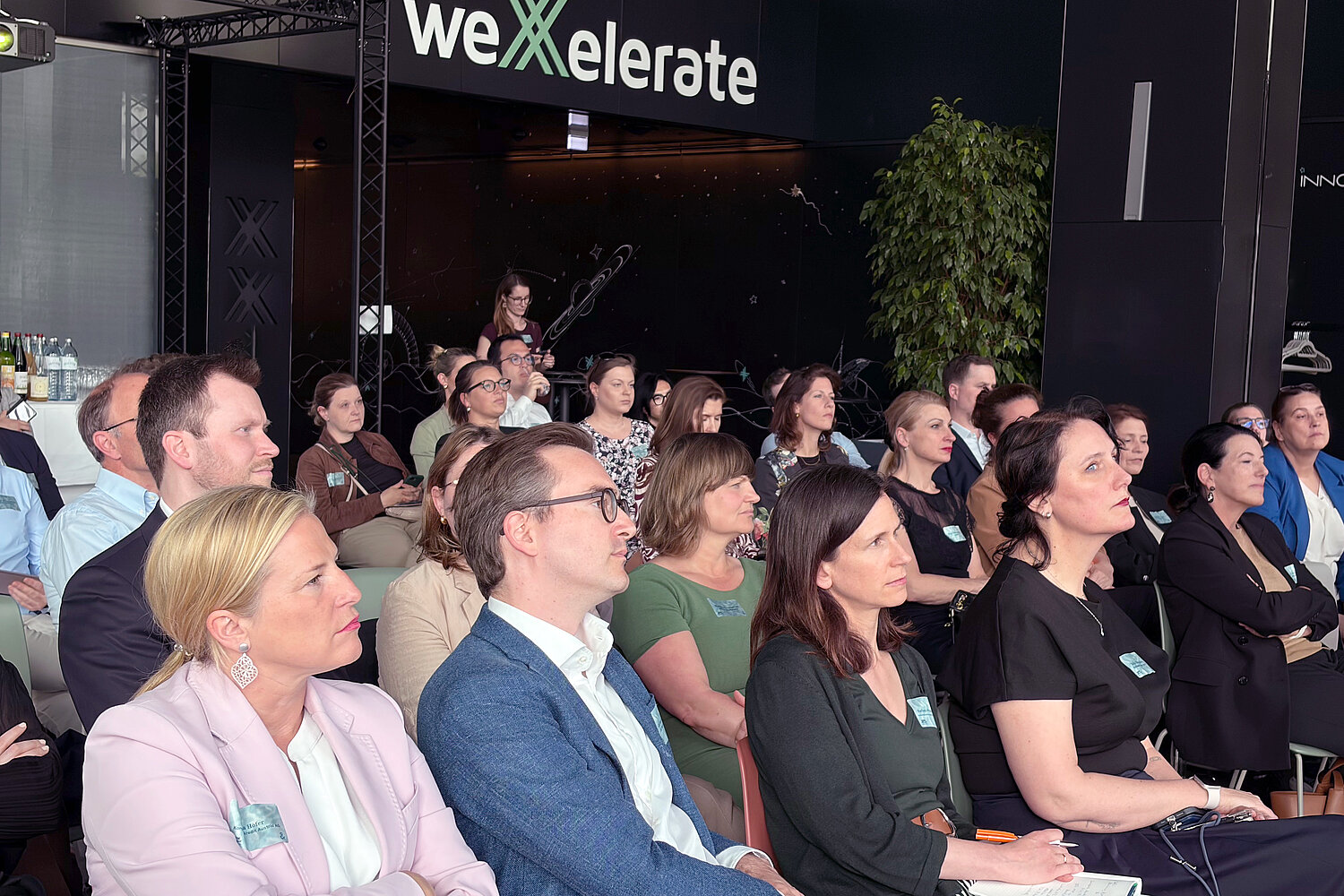
We discussed these findings on 6 May 2026 in Vienna with experienced HR decision-makers, as part of a joint event with the Federal Association of HR Managers (BPM) and ASFINAG.
Their accounts of their day-to-day work provide real context for the study’s findings.
What the research says
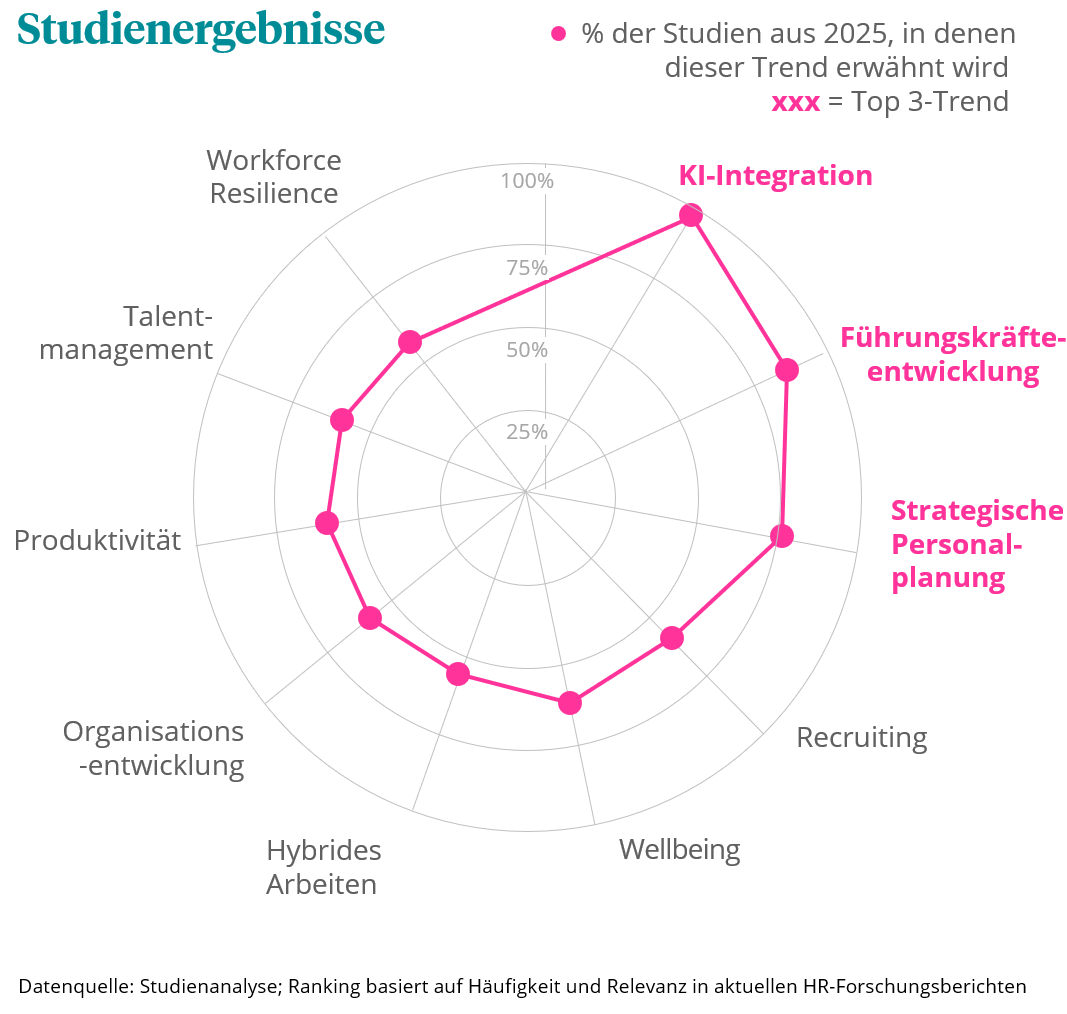
For our analysis, we reviewed leading global studies and compared the findings with the actual HR priorities of 15 client companies in the DACH region. The analysis shows that topics such as workforce resilience, talent management, wellbeing and hybrid working are widely discussed.
AI integration
No other trend has seen a comparable rise: in 2021, AI integration was relevant in just 9% of studies. Today: 100%. GenAI budgets are set to grow by 60% over the next three years, and 15% of executives are already actively integrating AI agents into their roadmaps. Leading companies are investing 80% of their AI budgets in process redesign – not in tool rollouts. This creates a need for change management that falls squarely on HR.
Leadership development
Leadership is a perennial topic – but the figures are sobering: only 37% of HR managers rate their organisation as strong in leadership development. A third of employees report poor leadership. And 43% of senior executives doubt their own effectiveness. This is not a marginal phenomenon, but a structural problem that runs through all levels.
Strategic workforce planning
63% of companies view skills gaps as a significant risk to business transformation. Nevertheless, only 12% engage in strategic workforce planning with a horizon of at least three years – whilst 73% remain focused on operational planning. The gap between awareness and action is particularly wide here.
What really matters in practice
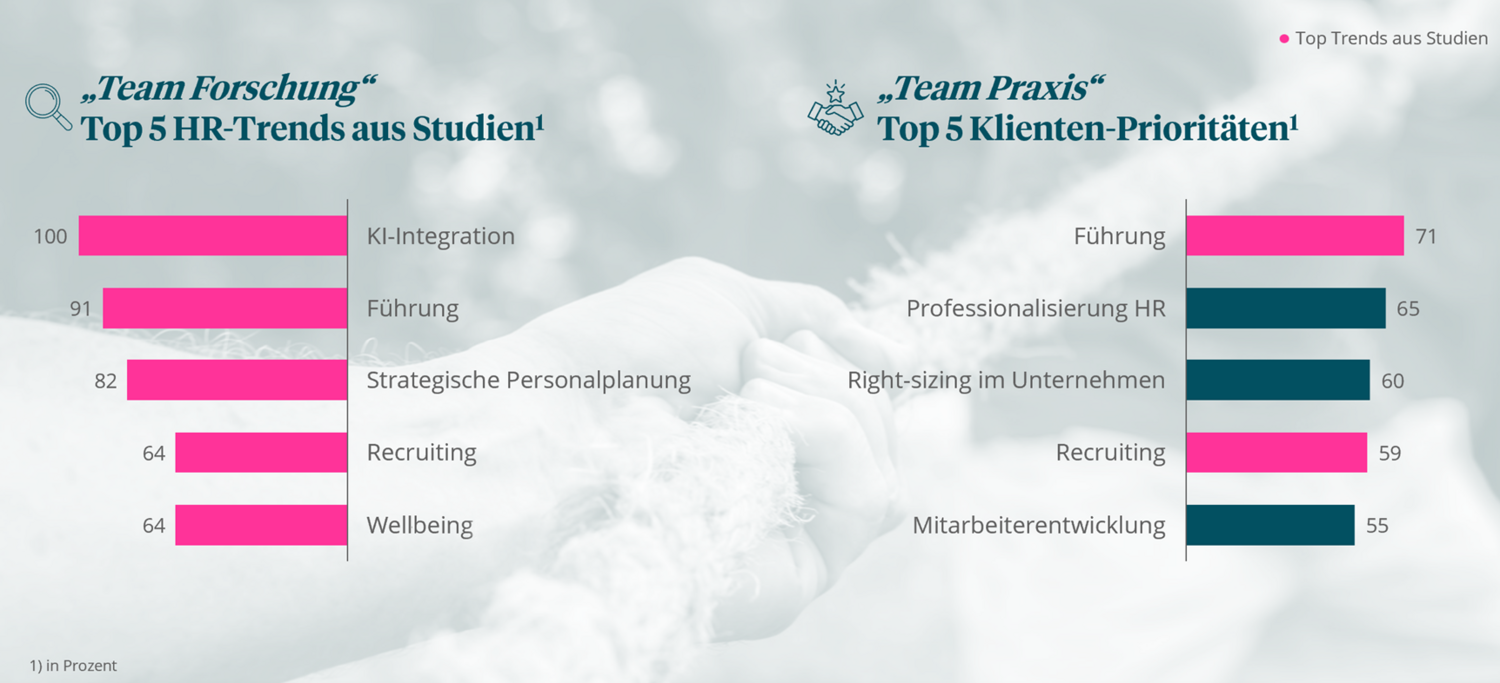
When we compare the research findings with our clients’ actual priorities, the discrepancies are significant – and revealing.
The biggest gap: strategic workforce planning
A key issue in 82% of studies. Yet only 11% of our clients prioritise it. A difference of 71 percentage points. The reasons are well known: a lack of data, sobering past experiences, and operational overload. Anyone wishing to establish strategic workforce planning in their organisation first needs a robust data foundation and a clear business commitment – otherwise it remains wishful thinking.
The blind spot in research: right-sizing
Not a single study lists right-sizing as a top topic. Yet 60% of our clients cite it as one of their most pressing priorities. Studies describe where HR is heading. Clients describe what is currently pressing. Right-sizing is not a future issue – it is a reaction to economic pressure. And it shows that anyone who bases HR work solely on trend lists loses sight of operational reality.
What this means is that there are trends that are equally relevant to research and practice – leadership and AI integration are among them. There are issues that fly under the radar but exert massive operational pressure. And there are expectations that HR can scarcely meet structurally with its current capacity.
How HR sets sensible priorities
The pressure on HR to establish its position and maintain visibility is very real. Trends are not only set within the discipline itself, but are often demanded by senior management. Yet HR capacity is finite. The key to effective leadership lies in doing the right thing at the right time. And that also means: consciously letting go.
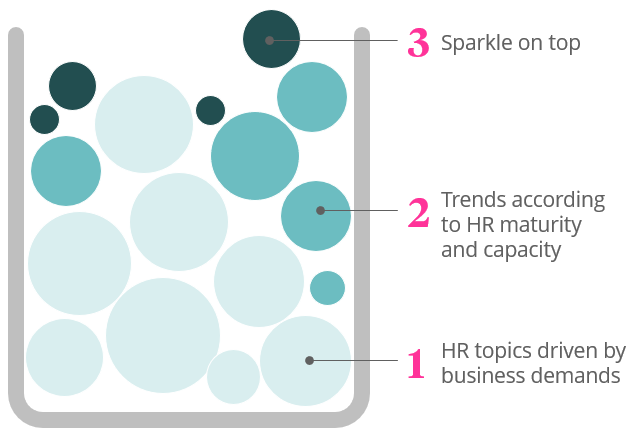
Our recommendation follows a clear three-step prioritisation process:
1. Ensure the basics are in place
What are the non-negotiable fundamentals without which the business cannot function? A reliable payroll process, a functional candidate experience, solid core HR processes. This foundation must be in place before the next step is taken. Anyone with gaps in this area should not be thinking about introducing AI agents first.
“Our starting point was to ensure efficiency in the basics – so as to tie up as little capacity as possible. That is why we transformed our operating model last year.”
Barbara Winkler-Penz
Head of Group HR, ASFINAG

2. Addressing business needs
What does the business really need from HR – right now, in this context? The key point here is that the business comes to HR with business problems, not with requests for HR products. It is up to HR to translate these needs.
“We should remove the term ‘HR trends’ from our vocabulary. As HR, we define ourselves by our contribution to value creation – not by the topics that studies happen to be highlighting at the moment.”
Dr Sabine Bothe
Group Head of People & Culture, Erste Group Bank AG

“The business comes to us with business problems. It is HR’s job to translate these into concrete HR solutions.”
Dr Gerhard Kreuch
Chief People & Culture Officer, VITREA

3. The icing on the cake
Only once the fundamentals and business requirements have been met: What are the issues that make HR strategically visible and create real added value? Here there is scope for innovation, for bold investments and for the issues that HR must consciously prioritise, because the business does not demand them of its own accord.
Three takeaways for HR practice
Ride the waves and let go.
Many trends follow economic cycles – particularly when it comes to labour market-dependent issues. HR doesn’t have to jump on every bandwagon, but it must recognise when an issue has peaked and then consistently realign its resources.
Not every trend delivers what it promises.
Studies are important catalysts, but not a must. The reality check is crucial: what actually delivers results in your organisation? And what ties up resources without creating real added value?
The right prioritisation sets the course.
Prioritisation means not only taking on new things, but also letting go of existing ones. A forced ranking of your own HR initiatives forces you to be honest: which projects and offerings does nobody really need anymore? Prioritisation creates clarity – for HR, for the business, and for the collaboration between the two.
“Business often demands everything at once. Structured prioritisation is the key to successful implementation – it’s not just a question of capacity.”
Julia Höfer
Head of People & Culture, Kommunalkredit Austria AG

“When shaping the HR agenda, prioritisation is required in the truest sense of the word – which also means dropping some priorities. The highest level of HR maturity isn’t the right answer for every business.”
Dr Axel Hüttmann, Partner, undconsorten



Insights on the topic